By Professor Sarah Berry, Chief Scientist at ZOE and Dr Federica Amati, Head Nutritionist at ZOE

Almost half of the humans on Earth will experience menopause, a time of life that, for many, can be incredibly challenging. Despite this, there are woefully few studies investigating ways to tackle menopause symptoms. While hormone replacement therapy (HRT) is a godsend for many women, it’s not suitable for everyone. This is why ZOE’s scientists focus on other ways to tackle menopause symptoms. We ask whether lifestyle factors can alleviate symptoms and enhance quality of life.
One powerful yet often underestimated area is nutrition. The food we eat can influence everything from sleep and mood to gut health, yet many people wouldn’t think to connect their diet with menopause symptoms. By understanding how nutrition interacts with our hormones and metabolism during this transition, we can uncover new, accessible ways to support women’s health during a famously challenging time. Mindful Chef’s balanced recipes are also a great way to stay on top of your nutrition.
World Menopause Day is the ideal opportunity to share our current understanding to help inform women as they navigate the transition.
Menopause affects everyone differently. Some people may have just a couple of mild symptoms, while others experience multiple, severe symptoms. Some are commonly known, like hot flushes and night sweats, but others are less well-known but equally challenging, like anxiety. And there’s very little research out there investigating why there is such a difference between women.
To help tackle this problem, at ZOE we designed the MenoScale, a simple, free-to-use online tool that helps women understand their menopause. The tool can help women make sense of their symptoms and track them over time. This helps people to understand how interventions, such as dietary changes, affect them.
As part of our ZOE research, we conducted a study on 27,932 perimenopausal women and 42,480 postmenopausal women. We aimed to determine the prevalence of common symptoms, identify those that were most challenging to live with, and investigate whether diet was associated with symptom severity.
Almost all respondents had at least one symptom: 99.8% of perimenopausal women and 92.7% of postmenopausal women. Shockling, around half had 12 symptoms or more.
To understand how food might play a part, we assessed the diet quality of our participants. We found that the healthier someone’s diet is, the less severe their symptoms tend to be. Just as importantly, individuals who follow healthier eating patterns experience fewer symptoms on average. Similarly, participants with a higher body mass index (BMI) are more likely to experience more severe symptoms.
Eating good food is important throughout our entire lives, and this study confirms that during menopause, it’s vital to get it right. ZOE’s research has also shown that menopause influences our metabolism – how our bodies process and respond to food – making it even more important that we eat well. We need to work with our body and give it the fuel it needs.
– Professor Sarah Berry
So, we now know that following a healthy diet may have real, measurable effects on how women experience menopause. As we continue to focus on menopause, sharing a message of healthy eating is ZOE’s primary focus. We know it can make a difference.

Dr. Federica Amati’s Menopause Nutrition Tips
During menopause, getting your diet right is one of the most important things you can do. Following a healthy diet makes a real difference to the number and severity of your symptoms and sets you up for a healthier post-menopause life. On top of these tips, I always recommend assessing your alcohol intake at this time of life. Alcohol is detrimental for health and poses an additional risk for menopausal women, so try to reduce alcohol as much as possible, aiming for a maximum of 1 or 2 small drinks per week.
With that in mind, these are my top tips for supporting a healthy menopause:
Power of Plants: Your gut microbiome needs fibre to thrive and your metabolism needs it to function at its best. Our bodies can’t create the digestive enzymes to break fibre down, but our gut microbes can. So, it travels the length of your gut before reaching your gut bacteria, which feast on it. As they break it down, they release a wide range of compounds that support many aspects of health, from digestive health to mental health and heart health. Fibre is found in all plants, but different plants have different forms and amounts of fibre, so aim to eat 30 different plants each week to keep your gut microbes happy with a variety of options.
Protein Pivot: Although the majority of adults already get enough protein, as we reach the menopause transition, it’s important to make sure we get enough of the best quality. Don’t be wooed by “high protein” snack bars that are filled with additives and preservatives. Instead, aim for dietary sources that provide the protein you need and pack in a range of other nutrients and even fibre. Good sources of protein include beans, tofu, legumes such as chickpeas and lentils, eggs, oily fish, fermented dairy like natural yogurt and kefir, and nuts and seeds.
Eager for omega: These are essential fatty acids, primarily found in oily fish, like mackerel and salmon. They protect brain and heart health, which is increasingly important as we age, and they have other diverse roles throughout the body, including our gut microbes. There’s also some evidence that they might help reduce night sweats. Omega-3 supplements are common, but it’s always best to get your nutrients from whole foods. So, try to eat oily fish a couple of times each week. Plant-based sources are less effective, but good options include flaxseeds, chia seeds, and walnuts.
Rainbow refreshment: Colourful plants contain bioactive compounds such as polyphenols. These fascinating chemicals help support your gut bacteria and have wide-ranging effects throughout your body, helping to reduce inflammation. So, aim for 30 plants per week, and be sure to include some colourful plants while you’re at it.
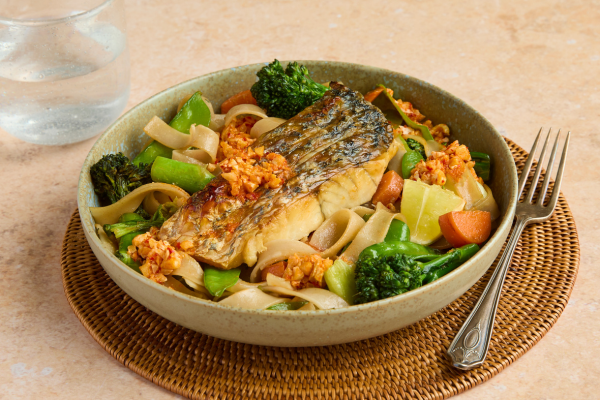
My 5 favourite Mindful Chef recipes:
Sambal Matang Noodles with Crispy Barrumundi
Barramundi is rich in omega-3 fatty acids, which can help manage hot flashes and support heart health, while cruciferous vegetables like pak choi and broccoli aid in hormone balance by supporting healthy estrogen metabolism.
Jackfruit Chilli Con Carne, Avocado Salad and Rice
Many of the ingredients in this recipe contain various phytochemicals that can help alleviate inflammation resulting from a decline in estrogen and progesterone levels.
Sticky Teriyaki Tofu Noodles
Tofu is a rich source of isoflavones, which act as a weaker form of estrogen, helping to alleviate hot flashes, mood changes, and fatigue.
Tuscan-style Goat’s Cheese, Squash, Tomato and Bean Stew
Goat’s cheese is rich in calcium and phosphorus, which are essential for strong bones and the prevention of osteoporosis, a condition exacerbated by the post-menopausal decline in estrogen levels.
Creamy Tomato Butter Beans and Pesto Broccoli
Butter beans are a great source of fibre for healthy digestion, whilst their rich magnesium content can help with muscle cramps and improve sleep quality.
Discover how your body responds to food and get even more personalised insights with the ZOE app and gut health test.