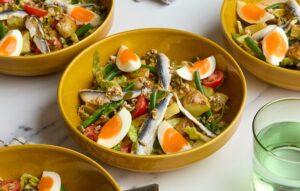
In the Mediterranean, food isn’t just nourishment – it’s a way of life. It’s about following the seasons, the ritual of eating together, and passing down knowledge through generations. It’s a practice that has sustained thriving communities for centuries. And it is associated with benefits for both people and the planet.
We asked Sasha Watkins, our Head of Health, what makes this approach so appealing – and how those of us who don’t live in the Mediterranean can still enjoy some of its benefits.
What do we mean by ‘the Mediterranean diet’?
The concept of the Mediterranean diet was identified by American physiologist Ancel Keys in the late 1950s. It’s based on his Seven Countries Study, which looked at the relationship between lifestyle, diet and heart disease across different populations.
The term ‘Mediterranean diet’ broadly describes the eating habits of the countries bordering the Mediterranean Sea. But in truth, there isn’t one specific diet: many countries border the Mediterranean, and eating styles vary among them and even within them. For example, the Greek version of the diet is much higher in total fat than the Italian one; the Spanish version features more fish and seafood; pasta dominates in Italy; and so on. What unites them is a pattern, not a recipe book.
What are the key components of the diet?
Though the diet varies, the pattern identified by Keys includes these core elements:
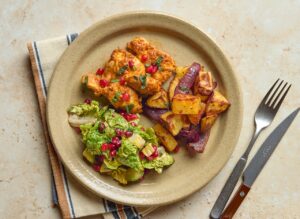
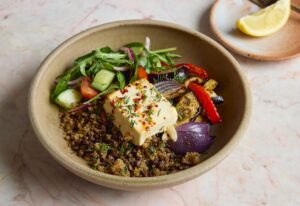
- Plant-forward eating – vegetables, fruit, wholegrains, legumes (beans, lentils, chickpeas), nuts and seeds are the foundation of every meal.
- Olive oil is the principal fat, with extra virgin olive oil used liberally for cooking and dressing – this is the most consistent feature across every version of the diet.
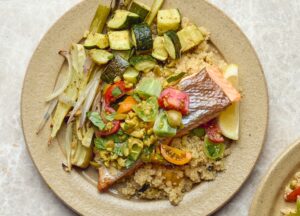
- Fish and seafood several times a week – especially oily fish like sardines, mackerel and anchovies.
- Moderate dairy and eggs – mostly yoghurt and cheese, which is often fermented.
- Very little red or processed meat, with poultry and eggs in moderation.
- Few refined grains or sugar.
And actually, it’s not just about the food itself. UNESCO acknowledged the Mediterranean diet as an Intangible Cultural Heritage in 2010, explicitly including its ‘set of skills, knowledge, rituals, symbols and traditions… and particularly the sharing and consumption of food.’ So it’s as much about the ritual as it is the ingredients. As with any way of eating, the Mediterranean diet works best as part of a healthy, balanced lifestyle.
What are the key health benefits we should know about?
The diet is associated with a variety of benefits, and longevity, heart health and overall wellbeing are some of the most significant. It’s also one of the most extensively studied dietary patterns in the world, which is part of the reason it’s so widely recommended by health care professionals.
Why do Mediterranean communities supposedly live longer?
The plant-forward diet is often linked to longevity, but research suggests lifestyle is also a key factor. Social connection and daily movement may both contribute. In fact, evidence shows that people with strong social connections have a significantly higher chance of living longer – an effect researchers have compared to quitting smoking.
How can we in the UK follow a more ‘Mediterranean’ way of living?
We may not be living in the Mediterranean, but we can certainly take inspiration from their way of living. A weekly shared meal – whether that’s Sunday lunch, a regular dinner with a flatmate or neighbour, or a monthly supper club – will introduce the social element. Just make sure you leave your phones in another room! Make the most of seasonal UK produce by cooking one vegetable-based dish every week, and go for fish twice a week – sardines and mackerel are great affordable options. Finally, try to walk somewhere every day. Mediterranean life suggests that regular movement is often more effective than a one-off gym session.
If there’s one thing we could do to bring this wisdom into our own lives, what would it be?
It’s not just about what you eat, but how you eat it. My top tip would be to try to eat real meals, slowly, with other people, as often as you can. You can get closer to that by cooking from scratch, which will push you towards fresher, less processed ingredients. And try to slow down – a Mediterranean meal should be a joyful social occasion. Enjoy it!